

September 10, 2026
The Secret Sauce to Good P.R.
- Expert Zone
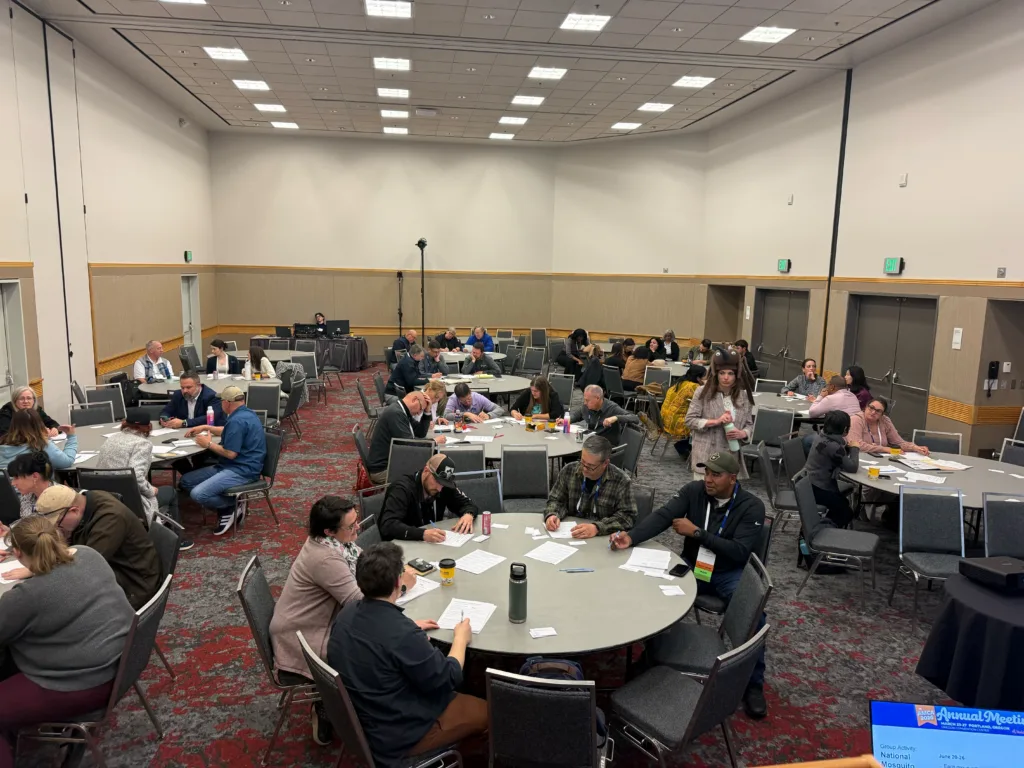
At this year’s AMCA Annual Meeting, the Yesterday’s Threat, Today’s Solutions campaign team hosted a hands-on workshop designed to answer a practical question: How do you build a year-round communications strategy that actually reaches your community?
The session focused on helping mosquito control professionals engage in strategic communications with the public they serve, regardless of the size of their programs and resources. The guidance was to focus on the most impactful opportunities (National Mosquito Control Awareness Week), then scale out from there.
As is true with the best workshops, participants learned from the stage, but most of all, from their peers. What unfolded was less of a presentation and more of a working session—one shaped by real questions, shared challenges, and the lived experience of the people doing this work every day.
Across the room, the same themes kept surfacing:
How do we get people to care?
How do we reach people who don’t even know we exist?
How do we explain what we do in a way that actually makes sense?
What emerged wasn’t just a set of tactics. It was a clearer way to think about our communications.
In public health and technical fields, there’s no shortage of important information to share. The challenge is making sure it’s understood.
During the workshop, participants were asked to explain their work without using their usual terminology. It quickly became clear how much meaning can get lost in translation.
Industry language—terms that feel precise and familiar internally—can create distance externally.
Framed as a game of “taboo,” participants were challenged to describe mosquito control without relying on their go-to words. The takeaway is simple, but critical: if people have to work to understand a message, they’re unlikely to engage with it.
Clarity isn’t just a stylistic choice, it’s the foundation of effective communication.
Practical tip: When drafting a social post or email, ask yourself: Would someone outside your field understand this? If you couldn’t use your usual terms, how else would you say it? Start there and simplify. Tools like the Hemingway Editor can also help ensure your language is clear and accessible.
Another common question: when should communication happen?
The answer isn’t “all the time.” It’s about choosing the right moments and understanding how those moments fit into people’s lives.
Three types of opportunities stood out:
As participants shared their own approaches, this became even more concrete.
Some described showing up at farmers’ markets and school events. Others talked about partnering with local organizations or using community spaces to share information. One group shared how they brought messaging into a baseball game experience, meeting audiences where they already were, rather than asking them to come somewhere new. One district even ran a blood drive in conjunction with a mosquito control education opportunity.
Relevance isn’t just about timing. It’s about context.
At one point, the workshop flipped the script: participants were asked to plan a campaign from the perspective of mosquitoes.
It was intentionally playful, but it led to sharper thinking.
Messages became more direct, more emotional, more focused:
The exercise underscored a core principle: effective communication doesn’t start with what an organization wants to say. It starts with what the audience needs to hear and what will move them to act.
For many districts, especially smaller ones, the question of scale can feel like a barrier.
But the examples shared in the room told a different story.
A modestly boosted social media post reached key local audiences and sparked meaningful engagement. Simple, consistent reminders helped shift behavior over time. School-based activities turned children into advocates within their own households.
None of these efforts required large budgets or complex campaigns.
They worked because they were focused, intentional, and tied to moments that mattered.
Small actions, when aligned with the right timing and message, can have an outsized impact.
Perhaps the most valuable part of the workshop wasn’t the presentation; it was the exchange.
Participants shared strategies they’ve tested in their own communities:
These ideas didn’t come from a single source. They emerged from lived experience.
And they pointed to an important opportunity: when ideas are shared, amplified, and adapted across communities, communication efforts don’t just improve—they scale.
Misinformation came up repeatedly as a challenge.
The discussion made one thing clear: providing accurate information is necessary, but not sufficient.
Effective responses also require:
In practice, that can look like responding directly to community questions, creating ongoing educational content, or using targeted outreach to reach new audiences.
It’s not just about addressing misinformation directly. It’s about building trust over time.
With so many ideas and possibilities, one final theme stood out: focus.
Not every message needs to reach every audience. Not every organization needs to do everything at once.
Instead:
Even a single, well-timed effort can contribute to a larger collective impact.
If there was one unifying takeaway from the workshop, it’s that effective communication takes collaboration, shared learning, and a willingness to test, adapt, and try again.
Yesterday’s Threats, Today’s Solutions was built with that in mind. The campaign supports districts in connecting with their communities through communication that is clear, relevant, and actionable.
When districts align around key moments, use shared tools and resources, and amplify each other’s work, even small efforts can grow into something much bigger. A single post can become part of a national conversation. A local activation can spark ideas across the country.
This campaign helps make that possible by providing messaging, creative assets, and strategic guidance that districts can adapt to their own communities. The goal is to strengthen awareness, build trust, and support meaningful action for mosquito control.
Because when we communicate together, we don’t just reach more people. We make the message matter.
And that’s where real momentum begins.
Read more about how you can protect yourself and your community from vector-borne diseases through safe and effective mosquito control practices.